


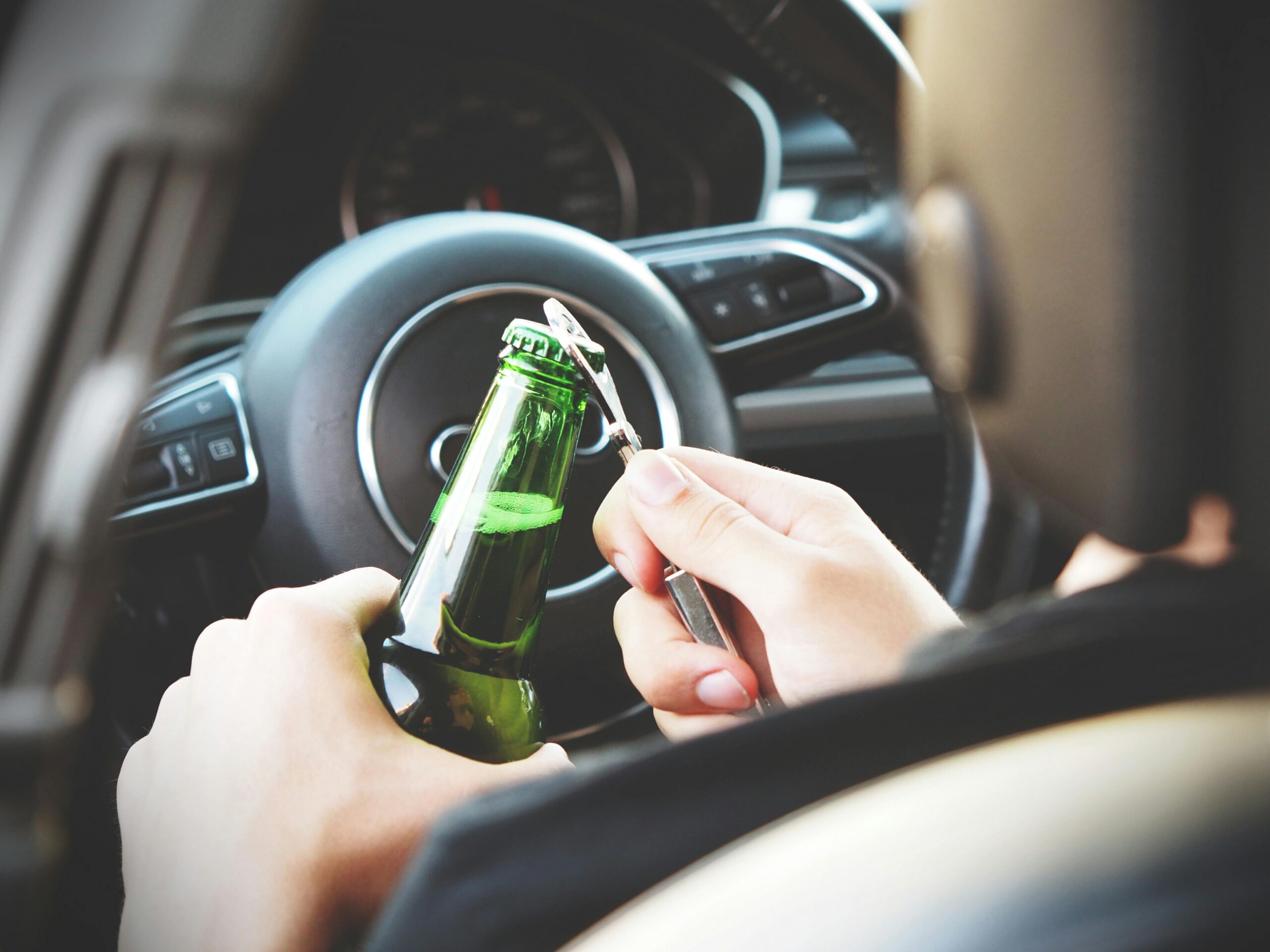
Special Considerations if You’ve Been Injured by a Drunk Driver
Driving under the influence of alcohol is one of the riskiest choices a driver can make. According to the National Highway Traffic Safety Administration (NHTSA), about 30% of traffic fatalities each year involve an intoxicated driver. Hundreds of thousands of others are injured in drunk driving accidents.
If you are injured or lose a loved one in an accident caused by a drunk driver, you are typically entitled to compensation for your losses. But accident cases involving DUI differ somewhat from the typical car accident case. Understanding those differences is key to ensuring that you get the compensation you deserve.
Negligence in DUI Accident Injury Cases
Nearly all car accident claims are based on negligence. That means that the responsible driver had a duty, they didn’t live up to that duty, and their failure to live up to the duty caused the accident and resulting injuries. Drivers have a general duty to operate their vehicles in a way that doesn’t put other people (or their property) at unreasonable risk. A driver who causes an accident because they failed to fulfill that duty is typically liable for damages caused by the accident.
In most car accident cases, it is the injured party’s responsibility to prove that the other driver’s actions were negligent, and that the negligence caused the crash. However, many states recognize the doctrine of negligence per se in drunk driving accident cases. Per se is a Latin term that means roughly “in itself.”
Negligence Per Se in Drunk Driving Accident Cases
In many states, a person who was driving drunk is automatically considered negligent, since driving under the influence of alcohol is itself a negligent act. But that doesn’t necessarily make the case as straightforward as it sounds.
First, to rely on negligence per se due to driving under the influence the injured person must show that the responsible driver was in fact operating under the influence. In some cases, that’s easy, because the other driver was charged with DUI and either pled guilty or was convicted. But that isn’t always the case. If there’s been no plea or conviction, proving that the driver was under the influence is similar to proving any other type of negligence.
Even if it is established that the driver was under the influence (and therefore negligent), that doesn’t always mean the drunk driver was responsible for the accident. Drunk drivers cause or contribute to traffic crashes in many ways, such as:
- Drifting out of their lane of traffic, sideswiping another vehicle or causing a head-on collision
- Misjudging distance, causing the driver to rear-end another vehicle
- Turning the wrong way onto a one-way street or exit/entrance ramp
- Hitting another vehicle or a pedestrian or bicyclist due to slowed reaction time
Still, other factors may play a role in the collision.
Is the Drunk Driver Always Responsible?
In the vast majority of DUI crashes, the drunk driver is at least partly responsible for the crash, if only because they could likely have avoided it if they hadn’t been impaired. But sometimes the other driver is partially at fault. Rarely, the sober driver may be entirely at fault.
Imagine, for example, that a drunk driver is sitting at a stop sign in a low-traffic area. A sober driver approaching the same stop sign is texting and fails to notice that there is a car stopped at the stop sign. The sober driver rear-ends the drunk driver, who is properly stopped at a stop sign. Though the stopped driver is under the influence of alcohol, the sober driver’s negligence was the primary cause of the crash.
In this scenario, the drunk driver was negligent in operating while intoxicated, but their negligence did not cause the accident. That means that despite their intoxication, they probably won’t be found responsible–or at least, not primarily responsible–for the crash.
The bottom line is that while the application of the doctrine of negligence per se can sometimes make pursuing damages after a collision with a drunk driver simpler, it’s not an automatic win for the injured party. The best next step after a traffic accident with an intoxicated driver is to speak with an experienced local car accident lawyer as soon as possible.
Criminal Restitution after a DUI Accident
If the intoxicated driver who caused a crash is charged with DUI or a related crime, the criminal court may order them to pay restitution. The benefit of a criminal restitution order is that failure to pay as ordered may constitute contempt of court or a probation violation or both. That means the driver may be at risk of jail time if they have the ability to pay restitution and don’t.
However, there are many reasons that an injured person’s rights are better protected by pursuing a civil claim for damages. For example:
- Many criminal defendants lack the resources to pay significant restitution, or can only do so in installments across a long period of time
- Automobile insurance typically covers civil liability after a motor vehicle accident, but not the obligation to pay criminal restitution
- Criminal restitution in most states is limited to measurable economic damages such as medical bills and lost wages, while a civil suit opens the door to damages such as pain and suffering and loss of quality of life
If the drunk driver who injured you or a loved one has been charged criminally and you’ve been asked to provide evidence of your damages to the prosecutor so they can pursue restitution, you should still contact a motor vehicle accident attorney. Pursuing a civil claim usually allows for more damages and opens the door to securing compensation from insurance coverage. In many states, punitive damages may also be available in a DUI accident case. When available, punitive damages can significantly increase the compensation awarded.
Uninsured Drunk Drivers
Unfortunately, drunk drivers are disproportionately likely to be uninsured. One reason is that in most states those who have previously been convicted of DUI are required to carry expensive high-risk insurance. Another is that repeat drunk drivers may be driving on suspended licenses, and so unable to obtain insurance.
When the intoxicated driver responsible for an accident doesn’t have insurance, the injured person may be able to recover compensation through their own uninsured motorist coverage. A majority of states either make uninsured motorist coverage mandatory or require that the insurance carrier offer you the option. Some drivers decline this coverage to save money, but that’s usually a bad decision. According to the Insurance Information Institute (III), more than 15% of drivers nationwide are uninsured.
If the driver who hit you is uninsured and you carry uninsured motorist coverage, you may think it will be easier to secure fair compensation from your own insurance carrier. Unfortunately, that isn’t always true. Denying or minimizing claims boosts an insurance company’s bottom line, whether the claimant is their own customer or not. If your injuries are serious, you may need an attorney to negotiate a fair settlement for you.
Third Party Liability in Drunk Driving Accident Cases
In many car accident cases, someone who wasn’t directly involved in the crash is partially responsible. Some common examples include:
- Another driver whose negligent action on the road caused one of the drivers involved in the crash to swerve into the path of the other
- The driver or owner of a truck that dropped debris in the road, if one of the drivers involved in the crash hit the debris or swerved to avoid it
- The entity responsible for road maintenance, if conditions such as an unaddressed pothole or burned out lighting caused or contributed to the accident
Of course, all of these and other types of third party liability may apply in a DUI accident case. But there is also a specific type of third party liability in some DUI cases. Most U.S. states have dram shop liability laws, which make a bar or restaurant liable for damages caused by overserving intoxicated customers. In some states, these laws also create liability for serving underage patrons.
Dram Shop Liability in DUI Cases
The specifics of dram shop laws vary somewhat from state to state. The best way to get information about whether a bar or restaurant may share liability for your injuries is to consult a local car accident lawyer who is experienced with DUI accident claims.
The core idea is that if an establishment continues to serve alcohol to an intoxicated customer and someone gets hurt as a result, the establishment can be held responsible. Often, this means significantly more compensation may be available. While individual automobile insurance policy limits may be insufficient to cover the injured person’s losses, a bar or restaurant is typically required to carry more extensive insurance coverage. However, dram shop claims are complex.
While a typical car accident claim hinges on what happened in a single location at a very specific time, a dram shop claim may require extensive investigation into when and where the driver was drinking, how much they had to drink at each establishment, whether they were visibly intoxicated and whether the server complied with applicable state law.
Consult an Experienced DUI Accident Lawyer Soon after an Accident
As you can see, there is a lot to consider when pursuing compensation for drunk driving accident injuries, and overlooking a possible responsible party can limit your compensation. The best way to protect against costly mistakes is to consult an experienced local car accident lawyer as soon as possible after your accident.
This article is for general informational purposes only and does not constitute legal advice. Laws differ from state to state, and every case is different. The best source of information about your specific claim is an experienced local personal injury attorney.