


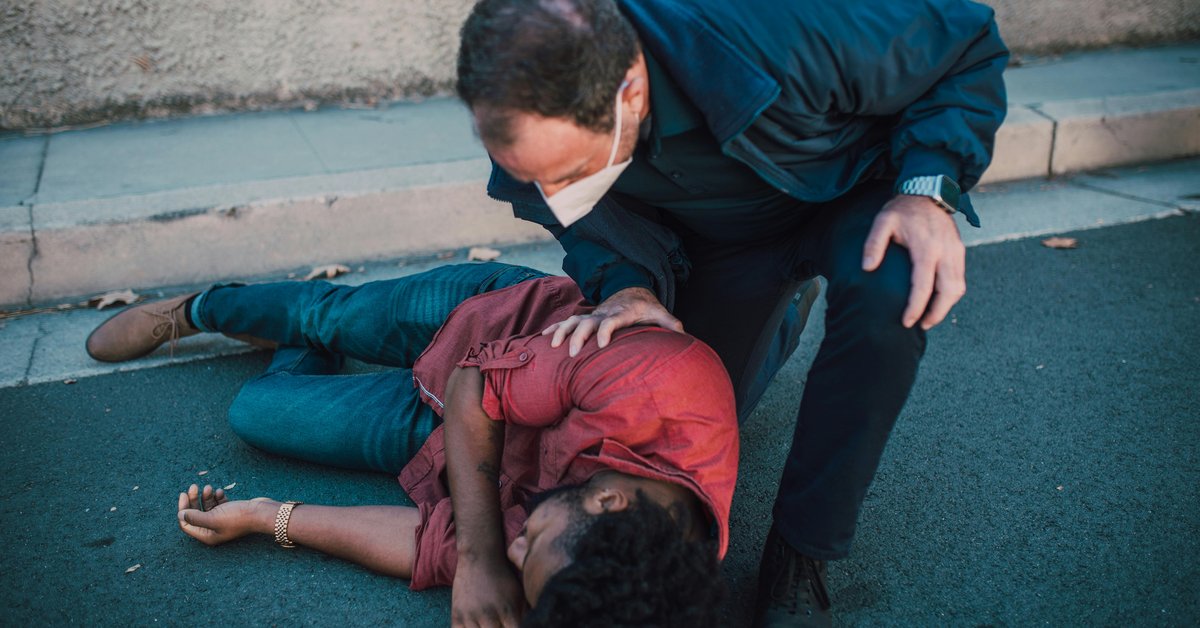
Fault in a Pedestrian Accident in Arizona: A Complete Guide
In Arizona, fault in a pedestrian accident is decided by negligence; whoever (driver, pedestrian, or both) failed to use reasonable care is responsible in proportion to their share of the blame. Arizona follows a pure comparative negligence rule (A.R.S. § 12-2505), which means an injured pedestrian can still recover money damages even if they were partly or mostly at fault. Their compensation is simply reduced by their percentage of fault.
If a driver hit you in a crosswalk while you had the walk signal, the driver is almost always at fault. If you stepped into traffic mid-block in dark clothing at night, fault may be shared, but you may still have a case.
Talking to a lawyer is free at Elmm Law Group. If you or a loved one were hit by a car in Arizona, request a free consultation before you speak to an insurance adjuster.
Arizona Pedestrian Fault Rules at a Glance
- Fault standard: Negligence — failure to use reasonable care under the circumstances.
- Comparative negligence: Pure (A.R.S. § 12-2505). You can recover even if you’re 99% at fault, but recovery is reduced by your percentage.
- Drivers must exercise “due care”: A.R.S. § 28-794 requires drivers to exercise due care to avoid hitting any pedestrian, sound the horn when needed, and use proper precautions when a child or visibly confused/incapacitated person is in the roadway.
- Pedestrians have the right of way in marked or unmarked crosswalks at intersections (A.R.S. § 28-792) — but must not suddenly leave the curb and walk into traffic.
- Pedestrians outside a crosswalk must yield to vehicles (A.R.S. § 28-793) — “jaywalking.”
- Statute of limitations: Generally, 2 years from the date of injury (A.R.S. § 12-542). Shorter if a government vehicle or public entity is involved (180-day notice of claim — A.R.S. § 12-821.01).
How Arizona Decides Who Is at Fault in a Pedestrian Accident
Arizona is a fault state (not a no-fault state) for car accidents, including pedestrian collisions. To recover compensation, the injured pedestrian, or their lawyer, must show that the other party was negligent. Four elements:
- Duty — The driver owed a duty of care (every driver owes this on public roads).
- Breach — The driver violated that duty (speeding, distracted driving, failing to yield, etc.).
- Causation — That breach caused the collision and the pedestrian’s injuries.
- Damages — The pedestrian suffered measurable harm, medical bills, lost wages, pain, and disability.
Fault is rarely 100/0. Investigators, insurance adjusters, and ultimately a jury assign a percentage of fault to each person involved. That percentage controls how much money the pedestrian recovers.
Example: Pure Comparative Negligence in Action
A pedestrian is hit while crossing Camelback Road at night, outside a crosswalk. The driver was texting and going 10 mph over the limit. A jury decides:
- Driver: 70% at fault (distracted, speeding)
- Pedestrian: 30% at fault (crossed outside a crosswalk)
- Total damages: $200,000
The pedestrian recovers $140,000 ($200,000 × 70%).
In some states (modified comparative negligence states), the pedestrian would recover nothing if their fault exceeded 50%. Arizona is different. Even at 80% fault, a pedestrian recovers 20% of damages. That’s why insurance companies often try hard to push a high fault percentage onto pedestrians, and why having a lawyer matters.
Arizona Pedestrian Right-of-Way Laws (Statute by Statute)
These are the statutes a court, adjuster, or police officer will reference. Knowing them helps you understand why fault is being assigned the way it is.
A.R.S. § 28-792 — Pedestrian Right of Way in Crosswalks
A driver must yield the right of way to a pedestrian crossing the roadway within a marked crosswalk or within an unmarked crosswalk at an intersection. The driver must slow down or stop. Other drivers may not pass a vehicle stopped at a crosswalk for a pedestrian.
Important nuance: Even a pedestrian in a crosswalk cannot suddenly leave a curb and walk into the path of a vehicle that is so close it cannot reasonably stop. That’s where comparative fault comes in.
A.R.S. § 28-793 — Crossing Outside a Crosswalk
If a pedestrian crosses outside a marked crosswalk or outside an intersection, the pedestrian must yield to vehicles on the roadway. This is what most people call “jaywalking.” Jaywalking does not automatically bar a pedestrian’s claim, it just shifts comparative-fault percentages.
A.R.S. § 28-794 — Driver’s Duty of Care to Pedestrians
Every driver must:
- Exercise due care to avoid colliding with any pedestrian.
- Give a warning by sounding the horn when necessary.
- Exercise proper precaution when seeing a child or any visibly confused or incapacitated person on the roadway.
This is the catch-all statute that often makes drivers liable even when a pedestrian was technically violating a rule, because the driver still had a duty to avoid hitting them.
A.R.S. § 28-796 — Walking Along Highways
If sidewalks are available, pedestrians must use them. Where they aren’t, pedestrians must walk on the shoulder facing oncoming traffic.
A.R.S. § 28-797 — School Crossings
Drivers must come to a complete stop when a crossing guard or school crossing sign is displayed. Violations here usually result in 100% driver fault.
A.R.S. § 12-2505 — Comparative Negligence
Arizona’s pure comparative-fault statute. Each defendant is liable only for their proportionate share of fault (called “several liability” in Arizona — A.R.S. § 12-2506). That means if multiple drivers contributed, each pays their share, not the whole.
When the Driver Is Usually at Fault
Drivers are typically found mostly or entirely at fault when they:
- Fail to yield to a pedestrian in a crosswalk
- Run a red light or stop sign
- Speed
- Drive distracted (texting, phone use)
- Drive impaired (DUI: alcohol, cannabis, prescription drugs)
- Fail to stop for a school bus or school crossing guard
- Hit a pedestrian on a sidewalk (almost always 100% driver fault)
- Back over a pedestrian in a parking lot
- Make a right turn on red without checking for pedestrians (very common cause)
- Fail to use headlights at night
When the Pedestrian May Share Fault
A pedestrian’s share of fault may go up if they:
- Cross mid-block or against a “Don’t Walk” signal
- Step into traffic from between parked cars
- Walk along a roadway intoxicated
- Wear dark clothing at night with no reflective gear
- Walk in the roadway when a sidewalk is available
- Are distracted (texting, headphones) and step in front of a vehicle
Remember: shared fault is not zero recovery in Arizona. It only reduces the recovery.
What About Hit-and-Run Pedestrian Accidents?
If the driver flees the scene:
- Call 911 immediately: Arizona police take hit-and-runs seriously and dashcam/traffic-cam footage may exist.
- File an Uninsured Motorist (UM) claim with your own auto insurance. UM coverage in Arizona applies to pedestrians struck by an unidentified or uninsured driver, even if you weren’t in a car at the time.
- Don’t assume you have no case; many hit-and-run pedestrian claims are paid through UM coverage.
What If a Government Vehicle or City Property Caused the Accident?
If a city bus, police car, public-works truck, or a defective traffic signal contributed to the accident, you have a much shorter deadline:
- 180 days to file a Notice of Claim (A.R.S. § 12-821.01)
- 1 year to file the lawsuit (A.R.S. § 12-821)
Missing these deadlines almost always kills the claim. Talk to a lawyer immediately if a public entity is involved.
Damages You Can Recover as an Injured Pedestrian in Arizona
Arizona allows recovery of both economic and non-economic damages:
| Category | Examples |
| Medical bills | ER, surgery, rehab, future care, prescriptions |
| Lost wages | Time off work, reduced earning capacity |
| Pain & suffering | Physical pain, mental anguish |
| Disability / disfigurement | Permanent injury, scarring |
| Loss of consortium | Spouse/family impact |
| Punitive damages | When the driver was DUI, reckless, or showed willful disregard |
| Wrongful death | Available to surviving family under A.R.S. § 12-611 |
Arizona has no cap on personal-injury damages; the state constitution (Article 2, § 31) prohibits damages caps.
How Fault Gets Proven in a Pedestrian Case
Evidence that drives fault percentages:
- Police crash report (AZ Form 30-6180): important but not the final word
- Traffic-camera and nearby business surveillance footage: preserve fast; many systems overwrite in 7–30 days
- Cell-phone records: for distracted-driving proof
- Event Data Recorder (EDR/”black box”): speed, braking, throttle
- Eyewitness statements
- Accident reconstruction expert
- Toxicology if DUI suspected
- Pedestrian visibility analysis, lighting, clothing, sightlines
A defense lawyer or insurance adjuster will use the same evidence to push fault onto the pedestrian. Acting quickly to preserve it is one of the biggest practical reasons to call a lawyer early.
What to Do After a Pedestrian Accident in Arizona
- Call 911. Get medical attention even if you feel okay; adrenaline masks injuries.
- Stay on scene. Wait for the police; ask for the report number.
- Photograph everything: vehicles, road, lighting, signals, your injuries, the driver’s plate.
- Get witness contact info: names + phone numbers.
- Do not admit fault or apologize. Statements get used against you.
- Do not talk to the at-fault driver’s insurance without a lawyer. Their adjusters are trained to elicit fault-shifting statements.
- See a doctor. Document every symptom. Gaps in treatment hurt cases.
- Save everything: bills, receipts, time-off slips, the clothes/shoes you were wearing.
- Call a pedestrian-accident attorney before the 2-year statute of limitations runs.
Common Mistakes That Hurt Arizona Pedestrian Cases
- Giving a recorded statement to the driver’s insurance. Don’t.
- Posting on social media. Anything you post can be used to argue you weren’t really hurt.
- Skipping medical care or doctor follow-ups. Gaps = “you must not have been that injured.”
- Waiting too long to call a lawyer. Evidence disappears in days, not months.
- Accepting the first settlement offer. It’s almost always a fraction of what the case is worth.
Why Fault Percentages Are Worth Fighting Over
A 10-point swing in fault, from 30% to 20% pedestrian fault, on a $500,000 case is a $50,000 swing in your pocket. Insurance companies know this and assign experienced adjusters and defense lawyers to push numbers their way. An experienced Arizona pedestrian-accident lawyer pushes back with reconstruction, video, EDR data, and statute-of-care arguments.
Talk to an Arizona Pedestrian Accident Lawyer: Free Consultation
If you or a family member was hit by a vehicle in Phoenix, Scottsdale, Mesa, Tempe, Chandler, Tucson, or anywhere in Arizona, Elmm Law Group can review your case at no cost. We work on contingency, no fee unless we recover money for you.